I am a student of history. It is a topic I have always enjoyed and been drawn to in many ways. Since minute one at school of learning about Normans, Vikings, Romans and various other folk noted for their influence on history in this part of the world, I have been fascinated. This continued into A-Levels and my degree which included modules on scientific and mathematical history but also the history of film and television. As a result, over the past few weeks I have continued to explore the world with a historical eye and I have thoroughly enjoyed spending my time discovering some of the older and very historical parts of England – Dover Castle in the south and Worcester, Hereford and Gloucester in the west.
As I have wandered around these places engaging with Roman walls, Saxon and Norman castles, medieval gothic cathedrals, navigational rivers that have bustled with trade, beautiful regency houses and modern hostelries – including a very fun one in Worcester that included awesome pinball machines and retro arcade games – I have wondered about the stories of all the people both living and long since passed that have walked these streets and through these buildings. It is the people I find fascinating.
These days I enjoy reading history books of all types. Two of the books I have on the go are history books but of very different aspects of history. The first is an investigation of the history of Christian church architecture and iconography called “How to read a church” by Richard Taylor. The other is “Arsenal and after”, the autobiography of Arsenal midfield legend Paul Davis! Now at an initial glance, there may appear to be very little in common between these two literary works. The thought did occur that both have connections to dramatic events in English history that coincidently occurred exactly 900 years apart – the Battle of Hastings in 1066 and England winning the World Cup in 1966 – but I think that might be pushing it! In reality, the one thing they share is my interest in them and the stories of the people contained within.
Visiting places and popping into the local church and museum and seeing everything from Neolithic arrow heads, bronze age jewellery, Roman combs, Saxon game boards, Tudor beds, or letters written in the trenches in The Great War, quickly remind you, people in history are simply that, people. They lived their lives in different clothes and conditions from those we would make today, but ultimately the only real difference is the “technology” of the day – how they cooked, farmed, built, communicated, and manufactured the tools they needed.
As human beings, their experience would have been so like that of people of the modern world that the differences start to become largely negligible. They were subject to the laws and traditions of their times. They may have been frustrated at the inequities that this led to. They could have been caught up in the extreme politics of war and conflict and found themselves wondering if they would ever return home or if their home may cease to exist. They may have travelled long distances or simply never left the village they grew up in. They would have been worried when they were ill and awed when staring at the sunset, moon or stars. They would have had favourite foods, celebrated birthdays and festivals, enjoyed a drink, music, and a laugh with their friends. They would have smiled at a giggling baby, danced at a marriage party, and mourned the loss of those they loved.
They also would have wondered, “Why am I here?”, “Where did I come from?” and “Who am I meant to be?” – all these fundamental questions that every human asks themselves at some point in their life. They may have turned to religion and ceremonies of the time or even undertaken a pilgrimage to holy places to raise prayers, seek guidance or inspiration or hope for good fortune. Many believe that Stonehenge, for example, was built for just this purpose – to celebrate the changing of seasons and raise prayers for the times to follow.
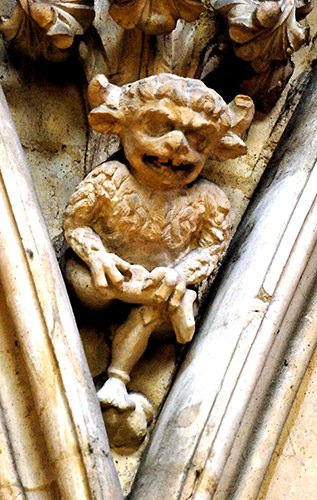
And it is not coincidental that many of the churches and cathedrals of the UK are believed to have been built in locations considered spiritually important possibly long before Christianity arrived on these shores. The non-canonical symbolism many of them contain, the Green Man bosses or the gargoyles, or unique items like the famous Lincoln Imp, are representative of other beliefs and stories sneaking into these locations. A kind of, “I am happy to follow this religion, but I’d like to just get in one of these other local things because I like to believe in them too” gesture, from the masons and architects of the time!
I have found all this very thought provoking and, in a way, quite inspirational recently. Alongside my recent trips has been the anticipation of a pleasant day I had yesterday with my Mum visiting her cousin and his wife, as we reviewed old family photos and the family trees that he has been working on. I am at something of a turning point in my life and as a result, I am naturally asking some questions about where I have come from, who I am and what is my purpose? Exploring the history of my own family was a very welcome part of that internal conversation.
Family trees are always interesting but most especially when they are your own. From work conducted by my grandpa, my great uncle and now my second cousin, I have now seen family trees covering six of my eight great-grandparents and I am very keen to explore the other two who I know have links to the Huguenots. Many of the lines are disrupted in English history by the Civil war of the 1640s as many records were destroyed and as such, until yesterday, the furthest back I had seen was to this era. However, with my maternal great-grandmother being Scottish and therefore the records being unaffected in the same way, from her line, despite her growing up in a Victorian slum in Aberdeen, there is a trace to certain Scottish nobles and eventually the English royal line in the era of the Norman kings of Henry I and to the Saxon era and Alfred the Great and back to the 8th century.
It is very exciting and equally humbling to see this laid out on a screen or piece of paper in front of you, but it should be said that genetically speaking it isn’t really that surprising! At this point we are talking about forty generations to a time when the English population was probably less than one million. A little experiment occurs here that says; I have two parents, four grandparents, eight great-grandparents etc and therefore forty generations back I have the genetic components of some one trillion plus people! Now as it is understood by modern science there have been roughly one hundred and seven billion homo-sapiens to have ever lived in the roughly two hundred-thousand-year history of the species – a number only ten percent of that one trillion people – something is amiss.
The answer, and we shall all squirm a little at this, is interbreeding! Ultimately, many of my relatives will have been distant cousins from each other and not known it – I hope!
A good example of this is the blue-eyed gene. I have blue eyes, as do my parents. Scientists have shown that the gene for blue eyes is only about 10,000 years old and from one individual. Therefore anyone with blue eyes shares that common ancestor. Magnify that across all human genes and it shows just how related all humanity is. (I shall avoid talking about the four percent Neanderthal genes we all have. I’ll leave that hanging there!)
Overall, it has been suggested that family trees should therefore be thought of as family webs and thus a connection, for example, to a noble family if you are of British heritage for a few hundred years or so, is likely. Doesn’t mean that excitement drops though!
So where does that leave me in my search to understand my ancestry and what it means for me? The photos provide context and make things real. You see the holidays, parties, fashions, and uniforms that give substance to the dash between dates I mentioned in this post. The oldest photo I have a copy of is of my great, great, great, great grandfather, George Gray (b.1788), probably taken in the 1860s. His family were haberdashers in Gloucestershire.
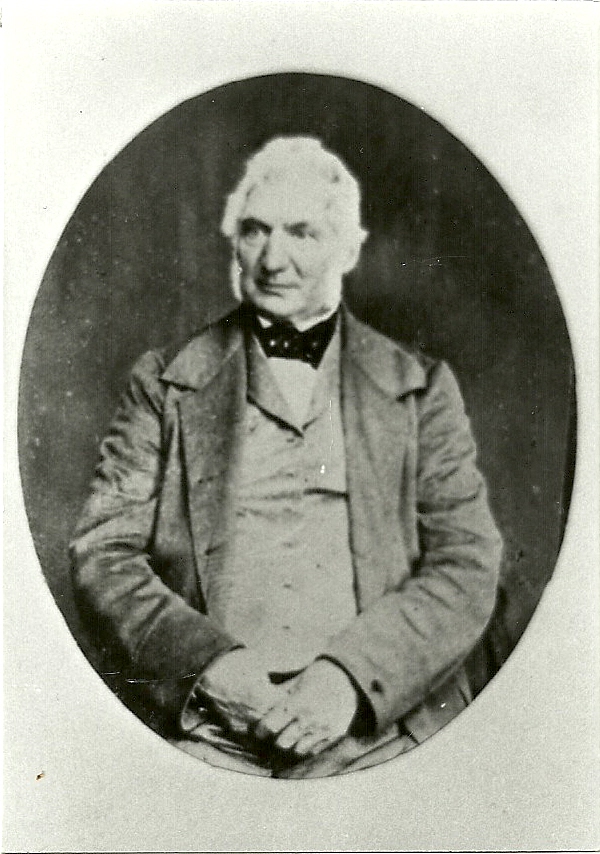
It has made me wonder if he, like me in the past week, also visited Gloucester Cathedral at one time and studied the tomb of Edward II or raised a prayer for the health of his family and blessings on those who had passed away? I’d like to think so. Maybe he defined himself by his job or as a head of a family. Maybe I get my enjoyment of reading history from him. Maybe not. I don’t know and can never know I suspect, but in the end, I would hope that he would be proud of me as a legacy of his life.
One day, I may be simply viewed as one name of many on a family tree and exist in nothing but photos. As is often the case, when considering these fairly existential things, I find myself turning to Star Trek! In this case the line from Captain Picard in Star Trek: Generations, “someone once told me that time was a predator that stalked us all our lives. But I rather believe that time is a companion who goes with us on the journey and reminds us to cherish every moment because they’ll never come again. What we leave behind is not as important as how we’ve lived. After all…we’re only mortal.” I don’t know what my life will have ahead of me from this point, but I suppose the best bit is finding out and maybe that is why I am here – just to be me and go and explore all that that entails.
Now, which cathedral is next …?


Leave a Reply