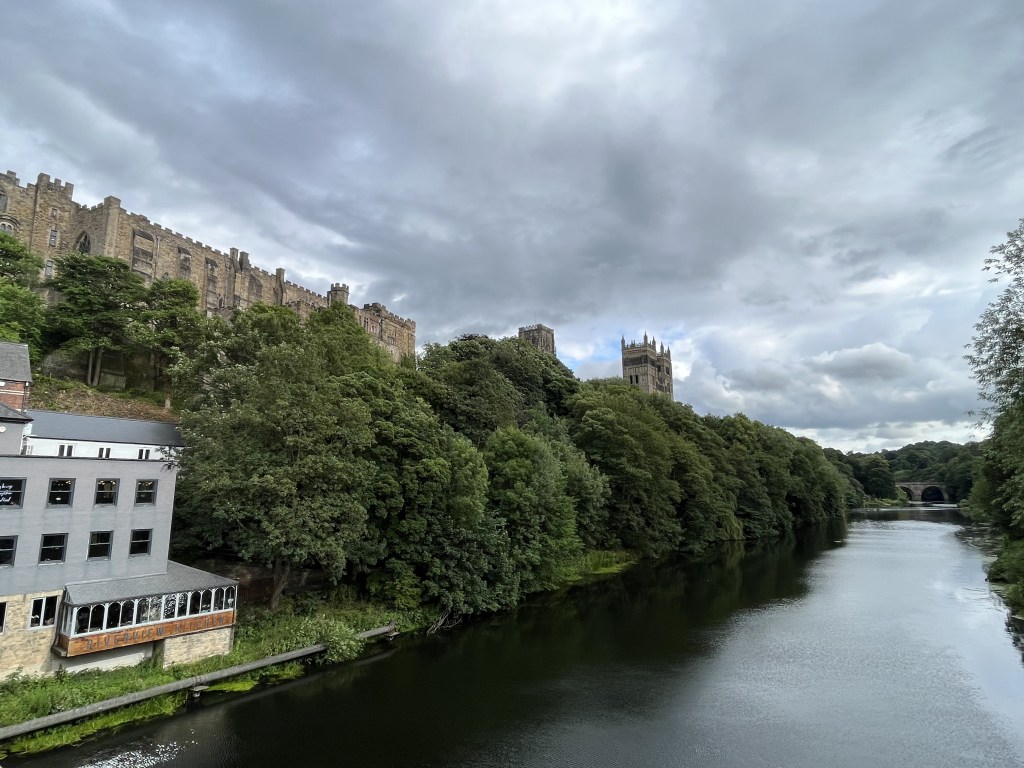
This past week my Mum and I took a little trip up the A1 to spend a few days in the City of Durham and visit the UNESCO World Heritage Site Cathedral and surrounds. A quick view of the old castle square area with the cathedral, castle and the selection of surrounding, now predominantly University owned historical buildings, and it doesn’t take long to understand why this area is considered special.
When you take a walk up the cobbled streets, the charm and warmth of this city nestled into its wooded gorge, with the river Weir curving round on three sides, immediately captures you. It has that wonderful higgledy-piggledy unplanned mix of about a thousand years of inhabitation and architecture, with homes and halls for rich and poor and, in many places, not a straight line to be seen as beams and walls have sunk and twisted through the ages.
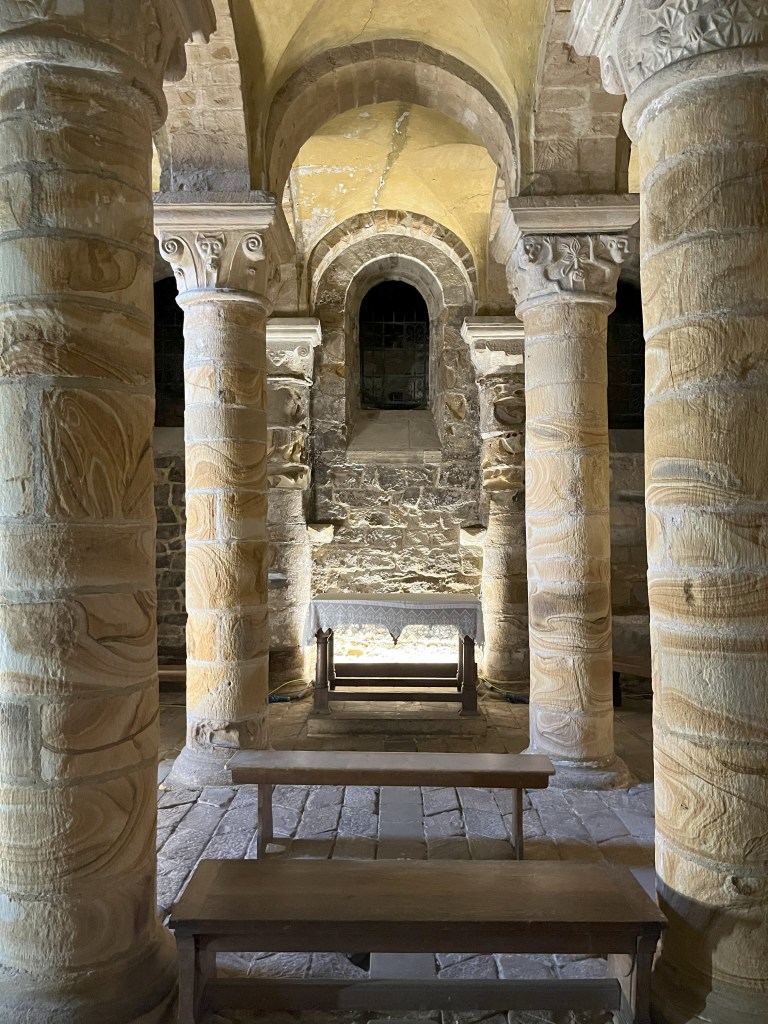
The castle, now being owned by the University, recalls images of the fictional Hogwarts when you learn that the bailey is now a student dormitory. The eye immediately searches for an owl or two. However, you are reminded of the great age and reverence of such a place in the castle’s stunning Norman chapel, which was a personal highlight of our visit.
I have had the pleasure to visit many of the thirty-three World Heritage Sites in the UK, but what I found most unique about Durham Cathedral was the stories associated with it. In particular, those of Saint Cuthbert and The Venerable Bede, that form the core of this place of pilgrimage. In my experience perhaps only the shrine of Saint Thomas Beckett in Canterbury Cathedral, in the case of UNSECO sites in the UK, matches in this way.
Saint Cuthbert is a fascinating person from history. A history in part recorded by the Venerable Bede and thus their connection, resting in that amazing place together, is quite powerful. There are stories associated with Cuthbert’s life and that of his remains. Miracles are said to of occurred before and after death. He was in his life both a hermit and a powerful Bishop of the Holy Island of Lindisfarne.
He was also pioneering naturalist, to use a modern term, to the point of a legend of otters warming his cold feet after he had prayed in the icy sea. I think that’s a lovely image that in my mind, with the greatest respect, sits somewhere between a seventh century Sir David Attenborough, a Disney princess singing in a forest, and a monk wearing novelty slippers!
During our visit, Mum and I sat on the wooden benches at his shrine and at that moment, we happened to sync up with a primary school party. They were lighting candles and reading pre-prepared prayers, thoughts and meditations on this early English saints’ life. Their voices were slightly nervous, sometimes quiet and others a little too loud, but with a tang of the wonderful local accent and with a determination that was very endearing. It also made us both think of our family home which sits in a parish whose church is dedicated to St. Cuthbert.
In turn, this has led me to think about how the great stories of the world still inspire. In most cases these form the fabric of our communal understanding of our culture and still sit within everyday dialogue. Think of the Norse Gods in the names of some of our days of the week for example. Some of these stories are factual, some are complete fiction and many sit in that wonderful place in between where legend, myth, fairytale, truth and prophecy mingle to challenge the reader or listener. Inevitably the stories of folk from so long ago contain all these elements.
As a football fan, how many times have I heard the name Achilles for example. The average fan in that moment is unlikely to consider classical Greece and the great warrior of the Trojan War. In most cases we are just hoping the magic healing spray comes out and our winger can get back on the attack! But his story has permeated so far as to be in the common lexicon for that vulnerable part of the lower leg.
To return to the Dark Ages, I am currently reading a book on King Alfred the Great by David Horspool, which looks at precisely this topic of analysing his story. I bought it at the Abbey in Shaftsbury Alfred commissioned and where his daughter was the first Abbess. The truth of the man, the histories, legends and, to an extent, the propaganda of the Anglo-Saxon Chronicle for example, that captures many of his deeds, are viewed forensically as best as possible through a fog of eleven centuries.
Having recently finished the Netflix series of The Last Kingdom, based upon the books of Bernard Cromwell, that deal with a fictionalised yet historically inspired Alfred and his legacy, and by comparing the two, I am very aware of how stories evolve through time.
In my mind’s eye, I create an image of Alfred based partly on the face of the actor David Dawson, who plays him so finely in the series, and on that of the statues in Winchester and Shaftesbury. All of these are less than one hundred and fifty years old however, and I am now aware that the most famous story of Alfred, that of the burning of the cakes, is likely an invention of the Middle Ages and apocryphal.
I’m sure my mental image and my experience of the story will develop further when I visit Bamburgh Castle in Northumberland on a trip next month. A place of great importance for the lead character of Alfred’s roguish yet honourable warrior Uhtred in those Bernard Cromwell novels.

Thus, for example, if the stories of the only English King to ever be called “The Great” are subject to such scrutiny and require detailed interpretation, I have wondered if this is why I have felt compelled to write and share this blog. My story, and that of my Jen, and the times we have shared together and the days since her passing. It is a truth that I wish to be known in the best way I can describe it. An autobiography of sorts. Not a list of comings and goings, but a perspective on my experience of this transition through grief and self-introspection in this unique context of our story.
In a previous post I mentioned that in psychology the “self” is considered a story we tell ourselves. Today, I returned to the driving range for the first time in quite a while to start to get ready to lose a lot of golf balls on a course with my cousin next month! Part of my story is that I convince myself I enjoy the game, despite it being highly frustrating, difficult, and thus possibly a form of self-flagellation where the rules, according to another story, have been partially determined on the amount of time it takes to drink a bottle of whiskey!
My story is complex. It contains my life experience, my beliefs and knowledge. My family and friends. My learning and interpretations of the world around me. My experience of love, joy, laughter, intimacy, loss and sadness associated with Jen. The influence of my hobbies and pastimes on my ways of thinking. Most of all, I’d like to think that it is valuable, because I am a part of this world.
Our visit to Durham Cathedral coincided with the art installation Gaia being on display. This is a 3D model of the Earth created using NASA photographs. It is designed to remind the viewer of the preciousness of this little island in space of ours, calling on those memories of St Cuthbert’s recognition of the beauty of nature.
I won’t ever be spoken about in the way that Alfred, Cuthbert or Bede are referred to but that’s ok. They would probably be amazed at where they exist in the history of the world. I’d like to think maybe I am more like JRR Tolkien’s Samwise Gamgee. I’m there to remember the stories and to pass them on when perhaps they might help. That is certainly the primary purpose of this blog.
In an episode of Star Trek Voyager that I watched a few days ago, stories are considered so important as to be a currency on a distant planet. Most of the stories of this planet cannot be viewed on photographs from space, although some of their consequences can be. My story, and that of my Jen, are unique and have influenced this world in a very small way and I am proud of that. Thus, I will continue to share these stories and my enjoyment of many others. I wonder if that is the greatest legacy of a life.
“All you ever were was a little bit of the universe, thinking to itself. Very specific; this bit, here, right now. All the rest was fantasy. Nothing was ever identical to anything else because it didn’t share the same special coordinates; nothing could be identical to anything else because you couldn’t share the property of uniqueness.”
― Iain M. Banks, Surface Detail

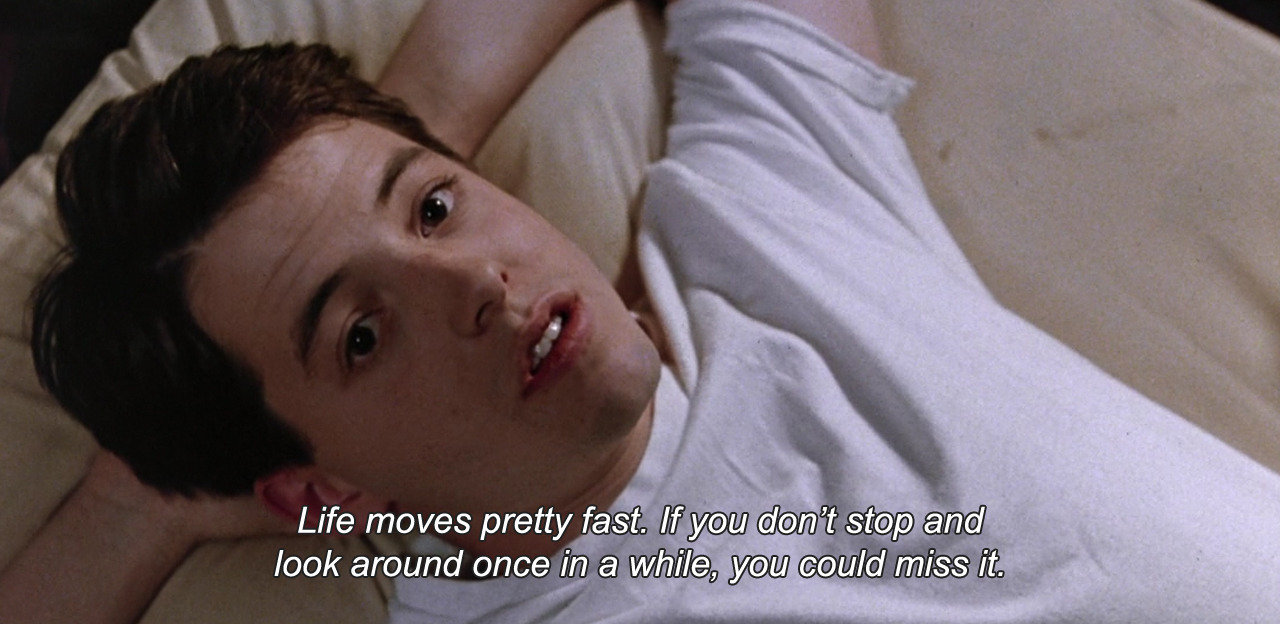
 Life moves pretty fast
Leave a comment