Recently, whilst travelling through the beautiful North Yorkshire Moors national park, I have been thinking a lot about fencing.
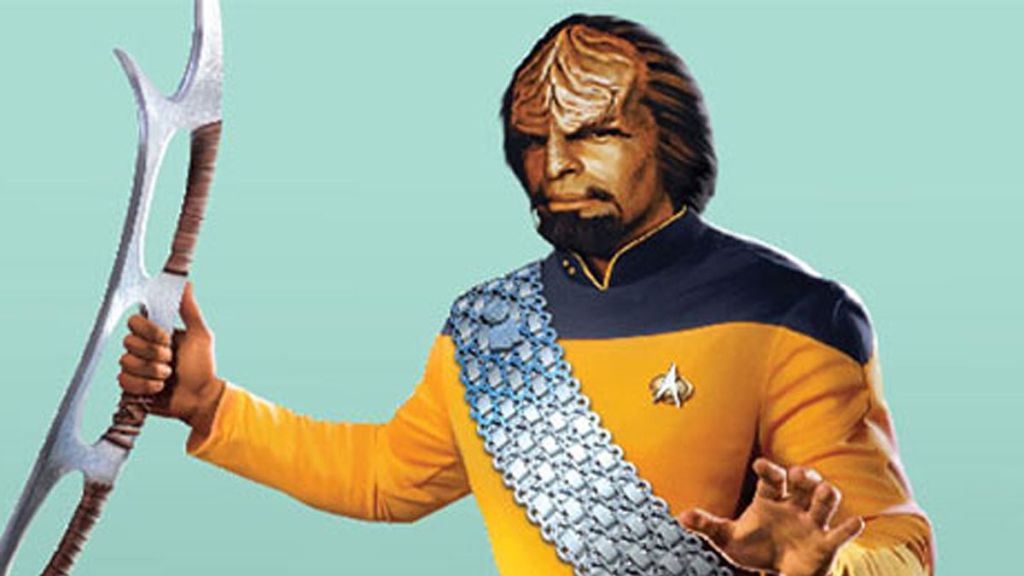
Now I don’t mean the Olympic sport. The controlled homage, using foil and epee, to gentlemen of the past duelling to settle a matter of honour. A sport, by the way, that everyone watching respects for its incredible reflexes and skill at thrust and parry but are all secretly thinking the same thing. That being, if the combatants were dressed less like the bad guys from Squid Game and more like Errol Flynn as Robin Hood or maybe Jack Sparrow and had to fight in an appropriate arena of say a tavern or a castle with swing-on-able light fittings, the ratings and audience would likely go through the roof! Or what about with lightsabers (like this)? Or Klingons armed with Bat’leths? How awesome would that be?! I fear I may be moving away from my original point!
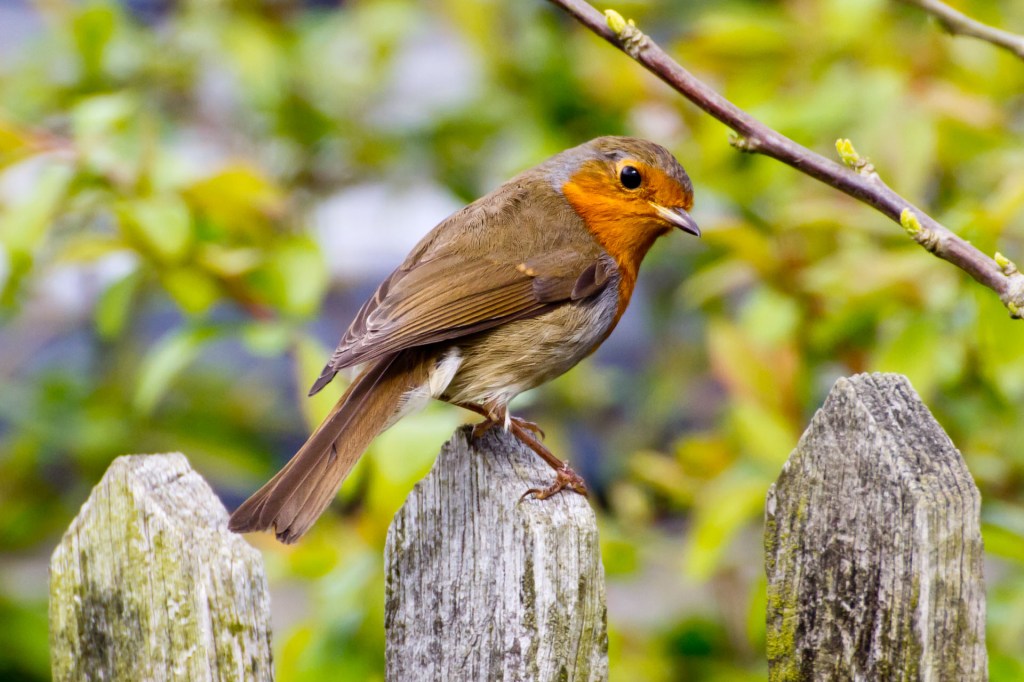
What I have actually been thinking about are fences. Your common-or-garden three to six feet high fence. Wooden or concrete poles joined by slatted wooden panels or beams of wood or lengths of wire, seen for literally hundreds of thousands of miles across the country in back gardens, around farmer’s fields or in multitudes of other places. A fence. A thing so ubiquitous that, as the great Marty Feldman once wrote, you are probably in a state of “frenzied apathy” just thinking about it!
So why, you may rightly ask, is fencing the subject of this post? (No pun intended!) Well, fences, along with their leafy, stone and metal cousins, – hedges, walls, and railings – can be very humble or very grand but ultimately are a practical representation of something far more important; a change in ownership or purpose of the land that they surround. A line in the sand that says, “here you are subject to these rules not the ones over there” and as a result have fundamentally underpinned pretty much every part of human history. From cattle corrals to the Great Walls of China and Hadrian, national borders, gardens and buildings, in every case they form an edge that requires a change in thinking when crossing from one side to the other.
Here is where I get to the crux of my thinking as I enter the second half of my sabbatical. Specifically, as I come to the point where I am being challenged by myself, and others, to begin to think about “what next?”.
Consequently, I am forced to consider my own metaphorical fences. What are my boundaries emotionally, developmentally and so on and what are the rules on the opposite side of them? Do the fences I have need to exist? Are they edges that, like those that run next to every mile of UK railway, are required to ensure safety? Or are they barriers I have created for myself that don’t have any substance outside of my own narrative?
In the natural world, the equivalent edges are where the land meets the water or maybe the water changes from hot to cold, fresh to brackish. Nature has shown us that to move through these rule changes requires adaptation and evolution. As a result, in some cases creatures, having been highly effective for millions of years, have maintained the status quo and others, through instinct or mutation, have found fresh horizons in new landscapes. This is a response I need to consider.
I know one option is not open to me and that is to look over the wall of the present into the past and ask, “can I have my ball back please mister?”, in a hope to return to the game whose rules were adhered to for so many years. This is of course because my teammate, my Jen, isn’t with me anymore and hence, no matter how much I may miss those times, the game has changed.
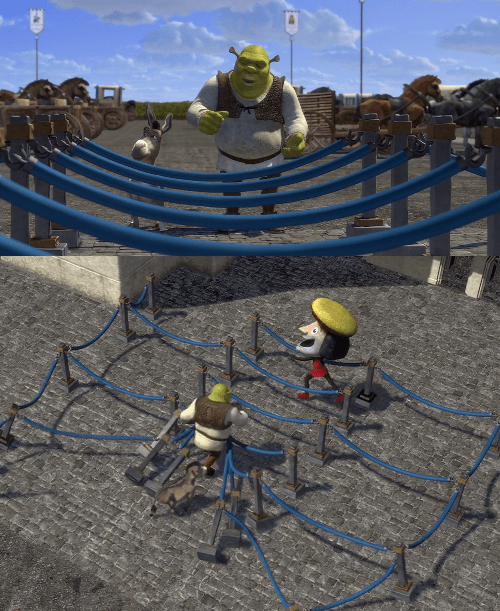
This entry is not about describing what my answers are to these questions for two important reasons; one, that I don’t currently know the answers and two, that if I could suddenly list them out, I think I would be worried that I am treating all these things far too casually. This is life changing stuff and, in my mind at least, taking a “as the crow flies” approach to smashing through barriers is both quite unnerving and feels over dramatic. I am not Shrek walking through the ticket barrier lines although I also don’t want to wiggle back and forth in a pre-defined route just because that is what is currently laid out.
So, what do I do? How do I approach these fences? Am I actually in a scenario where I need to get off the fence and land on a position?
To return to the start of these thoughts, maybe I need to take an en garde defensive stance ready to fend off any further thrusts of challenges that come towards me. However, this is a little against how I am trying to progress but some of these fences are intimidating, having metaphorical barbed wire across them. Those are the ones where comfort zones must be left in order to overcome them. I have always tended towards my comfort zones as a form of self-protection although it doesn’t necessarily mean that that was always the right choice. I would like to be more forthright, and I am in a position to be able to embrace this. My responsibilities at this point are really limited to me with the exception of my desire to continue being part of the lives of those whom I love.
I recently read something that said I should focus on not what I am supposed to be, just what I am – and hence my motivation for this blog. This process of taking my sabbatical is about understanding myself and where and what I am now as much as anything else. Once I have done that, I think I can think about what I want to change. I’m nearly there, and pressures will undoubtedly come along to hasten my decision making on next steps.
That is life at the end of the day! If there is one thing I do know, it is that you never know what will happen next. Change is the constant. At that point, I need to recognise my fences, climb over a few stiles, open a few gates or even have the courage to break them down if I need to. To evolve whilst being true to myself.
Just writing this down is one of the steps in this process and I am pleased I have taken it. There are plenty more to come.

 Life moves pretty fast
Leave a comment